Startups / Leggo Mobility
A last-mile EV auto ride-hailing platform.
India’s first retrofitted electric auto ride-hailing company. First and last mile for Chennai Metro. We owned the electric autos and put drivers on a monthly salary. Riders paid one flat fare per km, with no surge.
The metro was cheap. Getting to it wasn’t.
A daily commuter’s metro ride cost ₹20 to ₹30. But reaching the station, even 1 km away, cost ₹100 on ride-hailing apps, and the same again from the station to the office. The whole trip cost about as much as going straight there, so people drove or booked a cab, and Chennai Metro lost riders. On top of the price, this is what commuters said was wrong with ride hailing.
Source: LocalCircles survey, as cited in the Leggo deck
Still unsolved: the last mile in India’s metro cities today
True last-mile connectivity, waiting at every station.
Leggo was built for one job: last-mile connectivity, the first and last kilometres between the metro and your door. Our electric autos waited at the station, so there was nothing to book and nothing to wait for. ₹12 a km, on time, never cancelled, and zero emission, so the metro finally made sense door to door.
We never competed with them. We served one trip only: the last mile around the station.
Every ride started or ended at a metro station, within 5 km of it.
People riding the metro to work, twice a day, every day. The most repeatable trip in the city.
- 53%Cheaper door to door: ₹90, down from ₹190
- 10 minFaster on the same 13 km trip
- 0 gCO₂ on the first and last mile
- 5%More footfall at the metro stations we served
Before Leggo
- 2 km₹100 · 15m · 200g
- 10 km metro₹30 · 15m · 0g
- 1 km₹60 · 10m · 100g
With Leggo
- 2 km₹40 · 10m · 0g
- 10 km metro₹30 · 15m · 0g
- 1 km₹20 · 5m · 0g
Why we owned the autos and hired the drivers.
Everything came back to one goal: the best ride a daily commuter could get. Safe, waiting the moment they stepped out of the metro, never cancelled or late, zero emission, and the most affordable option on the road. Aggregators can’t promise any of that, because the driver decides. So we took the BluSmart playbook and applied it to autos: we owned the fleet and put drivers on a salary. Electric running costs and retrofitted autos kept our costs low, and every trip started where the demand already was. That’s how we charged less and still broke even.
A ride hail aggregator facilitator who owns fossil EV assets, supports its drivers with a commission stable income plan and provides rides with frequent no cancellations at a variable fixed charge.
Autos waiting at the Leggo point inside the metro station.
Trained, salaried drivers. A ride booked is a ride taken.
₹12 a km at launch. No surge, ever.
Only possible because we owned the fleet. Ola and Uber can’t promise it: their drivers choose and buy their own vehicles.
Built to look like a company drivers would be proud to wear.
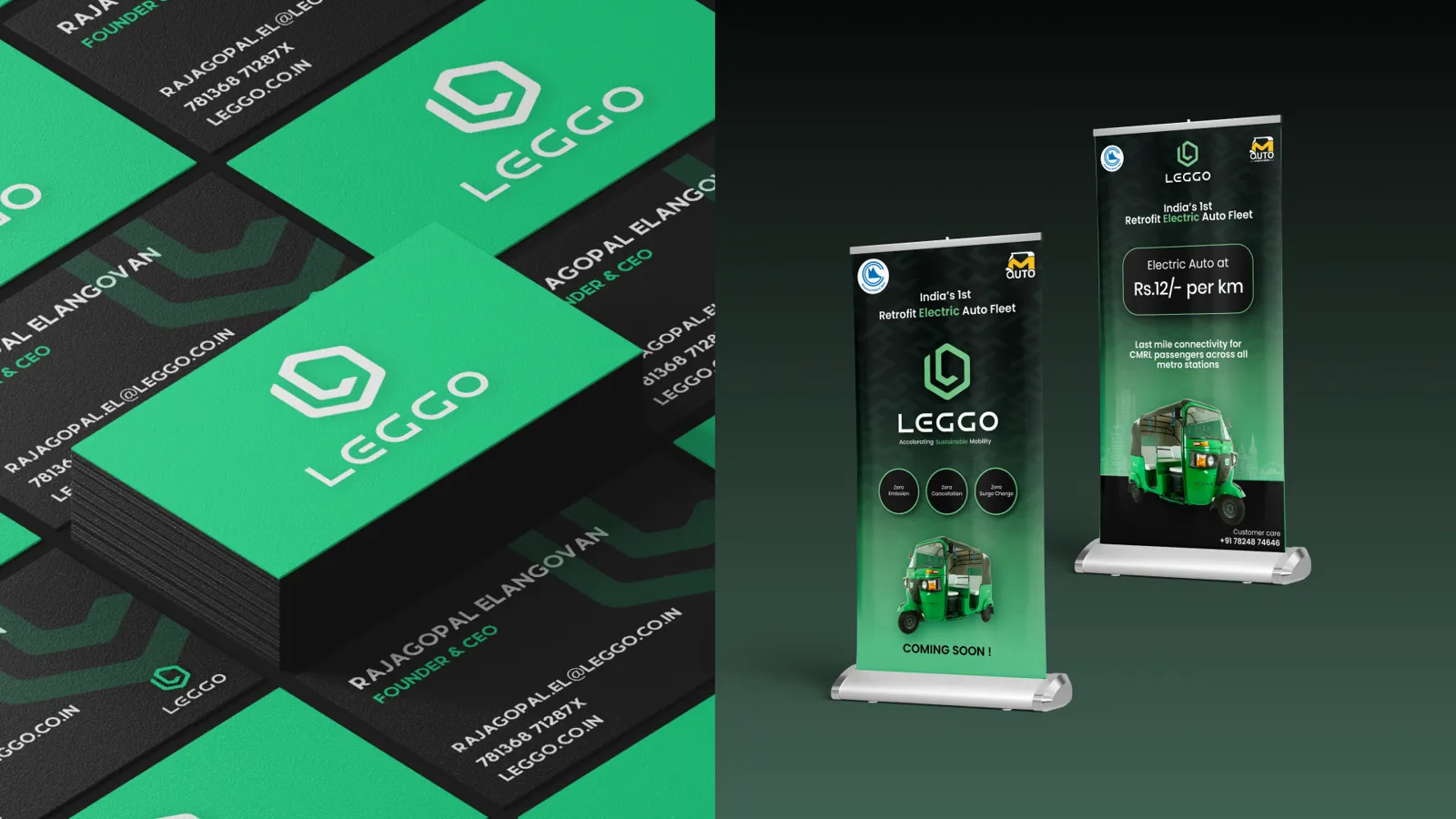
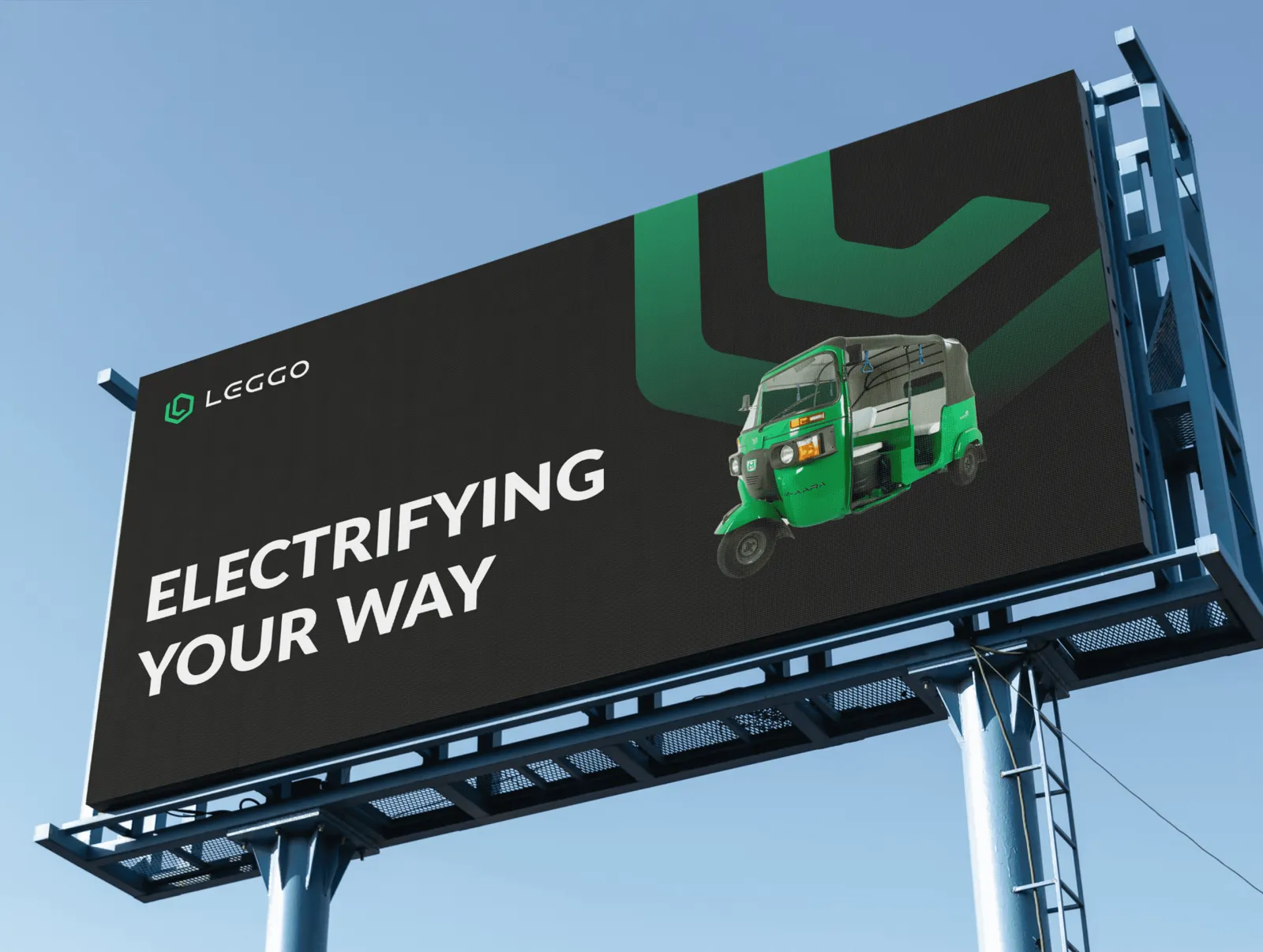
Identity, uniforms, ID cards, standees, flyers, the kiosk and both apps. Second Thought designed all of it.
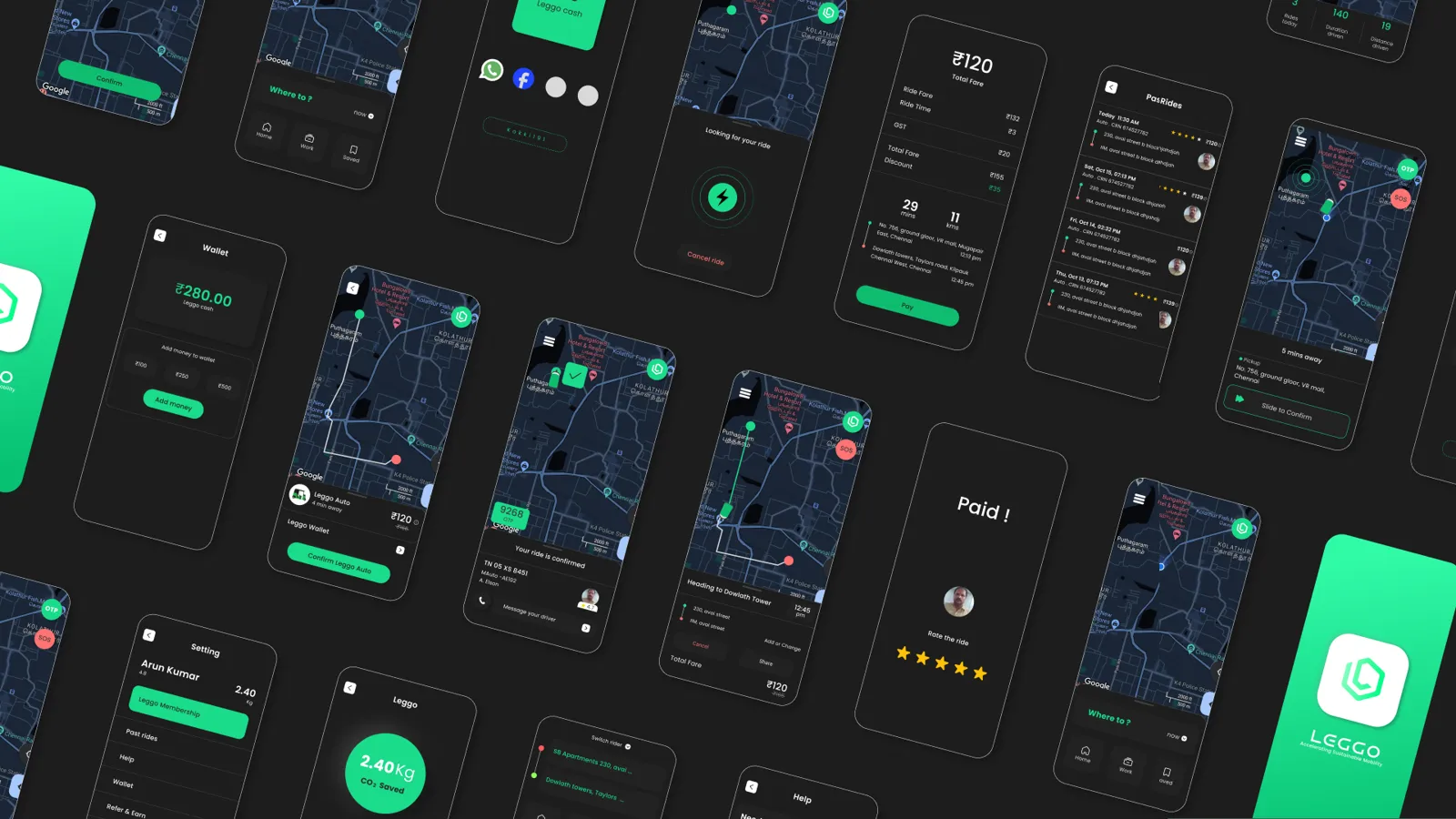
Two apps: one for riders, one for drivers.
Riders reached a Leggo point, rode on a digital meter and paid by QR or cash. Drivers' rides were tracked and paid incentives on performance.
A deal where both sides won.
We pitched Chennai Metro Rail ourselves. They needed more footfall; we needed demand. They made us their operation partner, with parking and charging inside every station we ran. Riders walked out of the station straight into a Leggo, so we got customers with zero marketing spend, and the metro got around 5% more footfall. The right partnership did the work an ad budget never could.
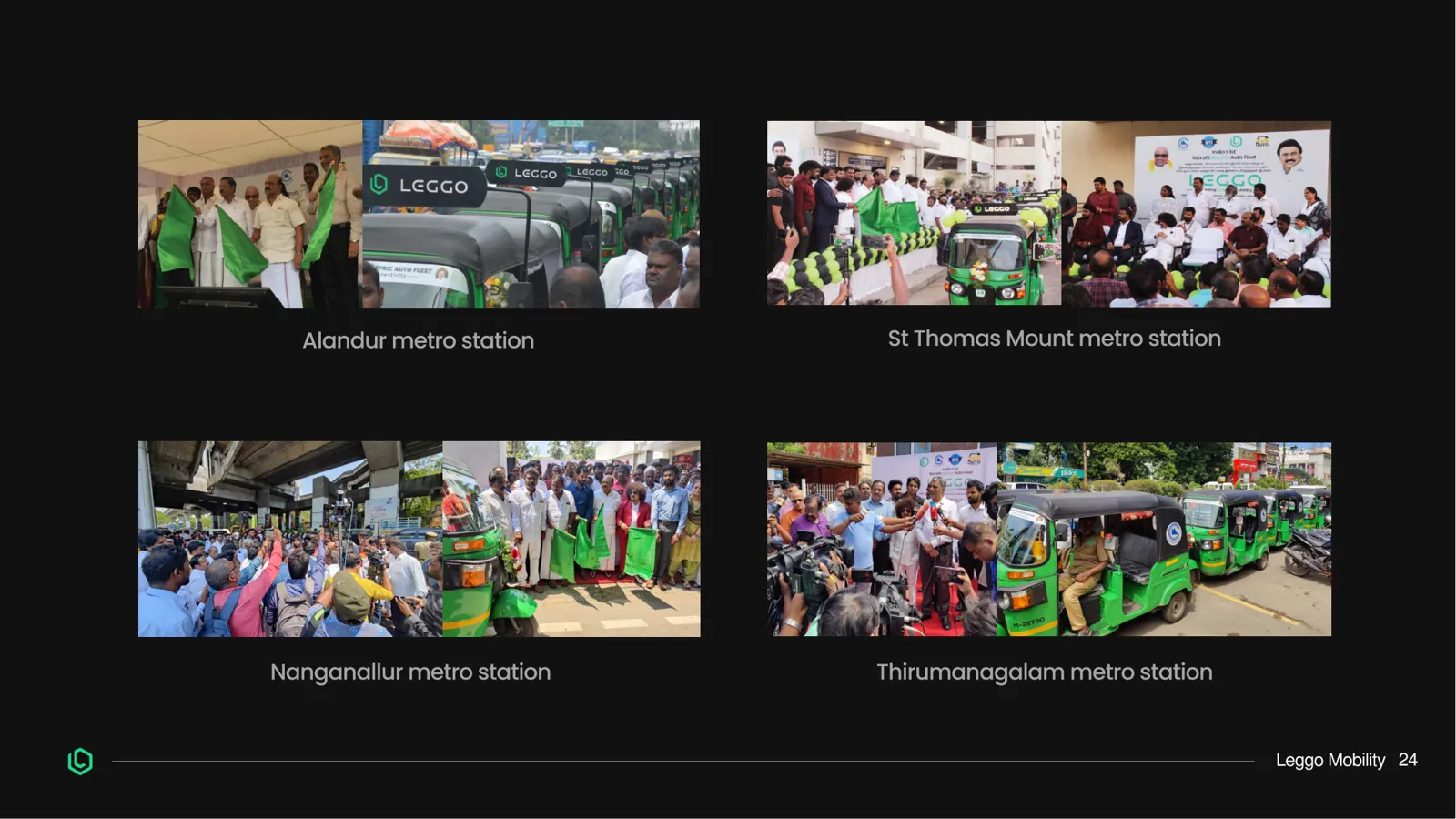
- 10 Nov 2022AlandurLaunch, flagged off by Minister T. M. Anbarasan
- 16 Dec 2022St Thomas MountSecond station
- 31 May 2023NanganallurThird station
- 9 Jun 2023ThirumangalamFourth station
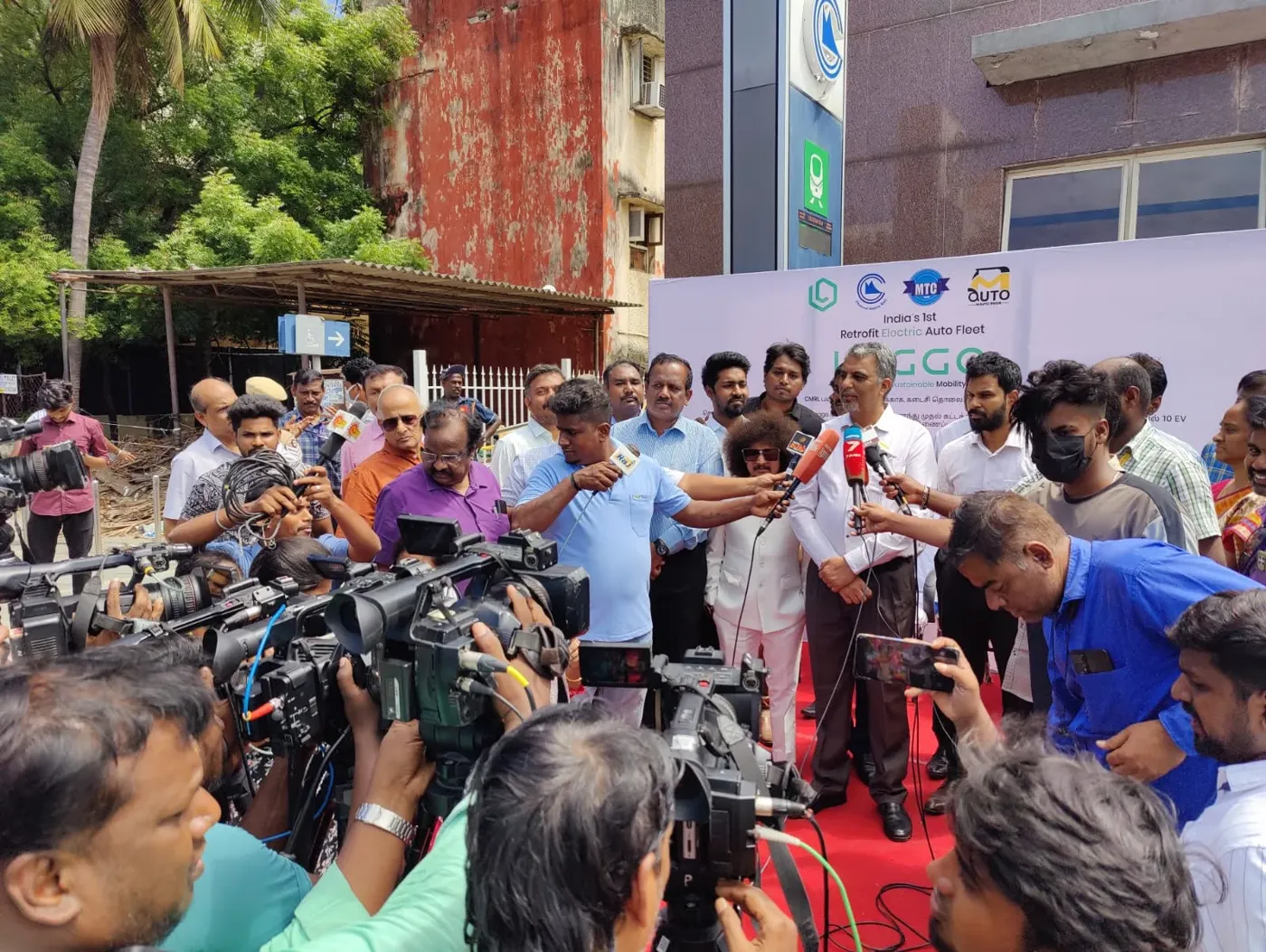
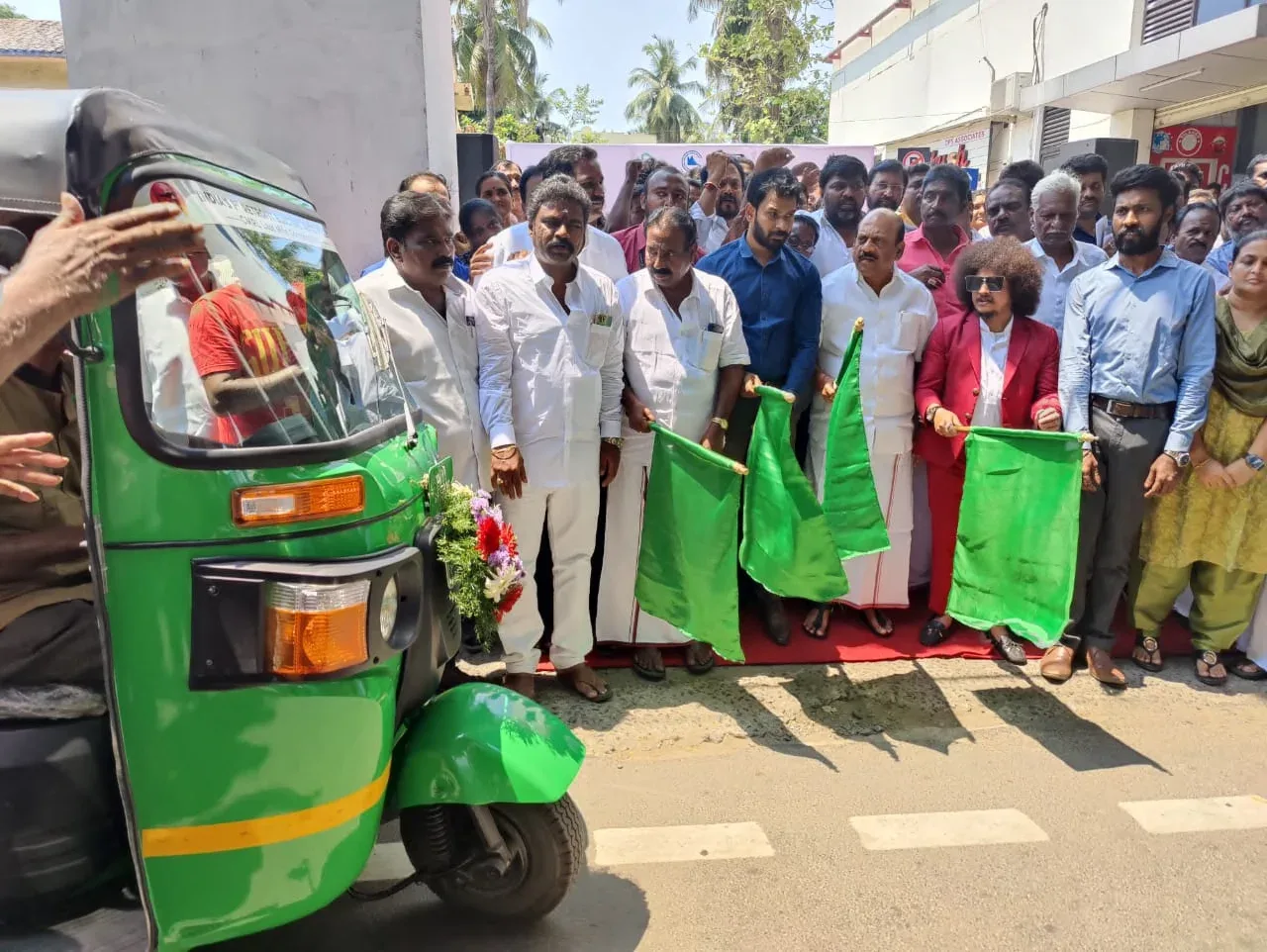
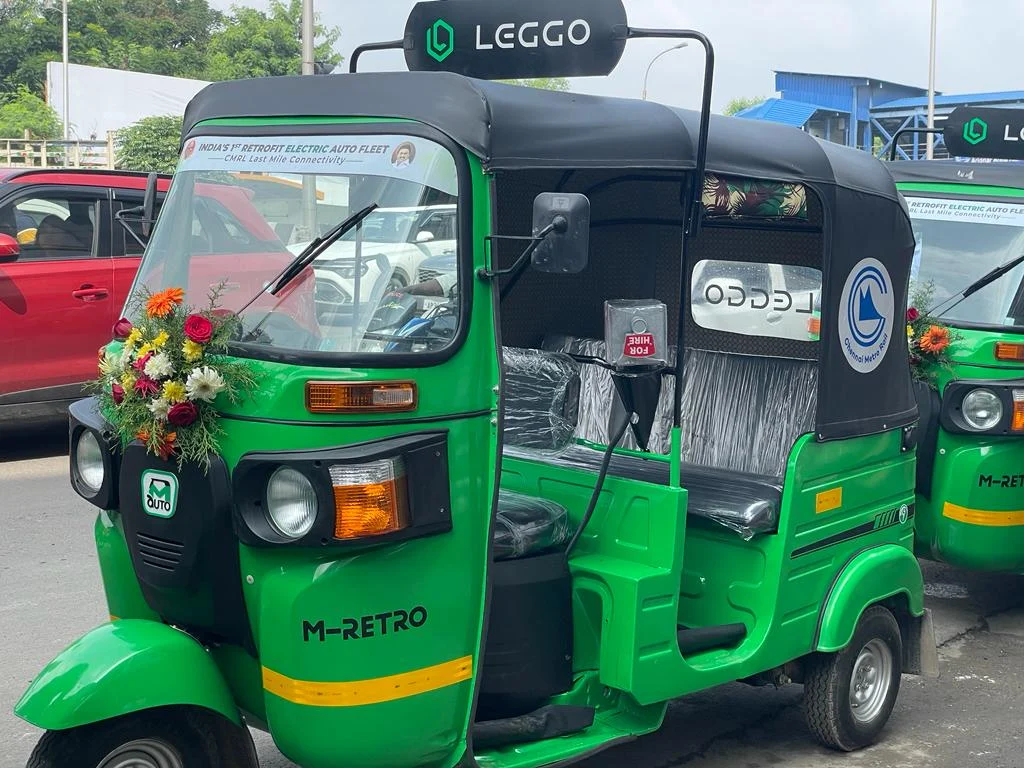
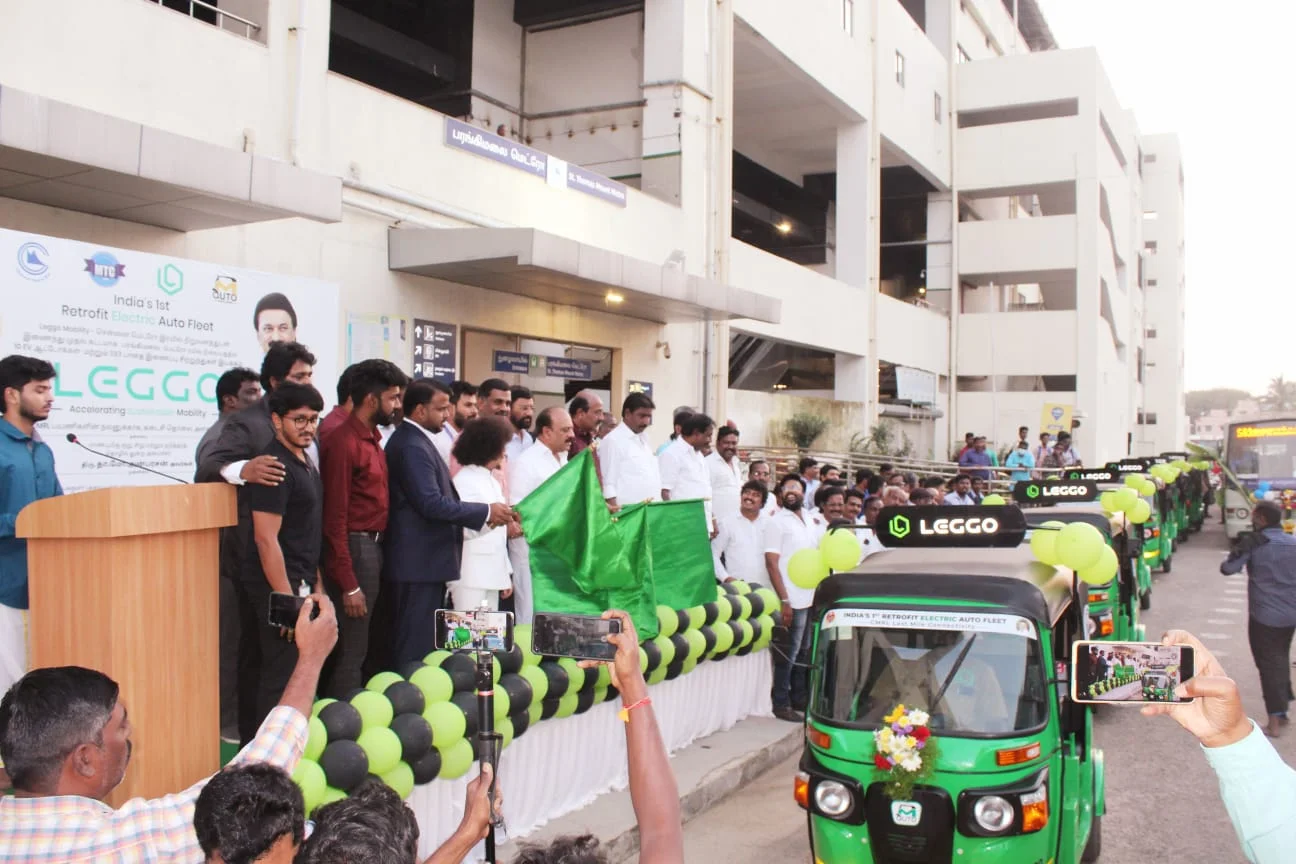
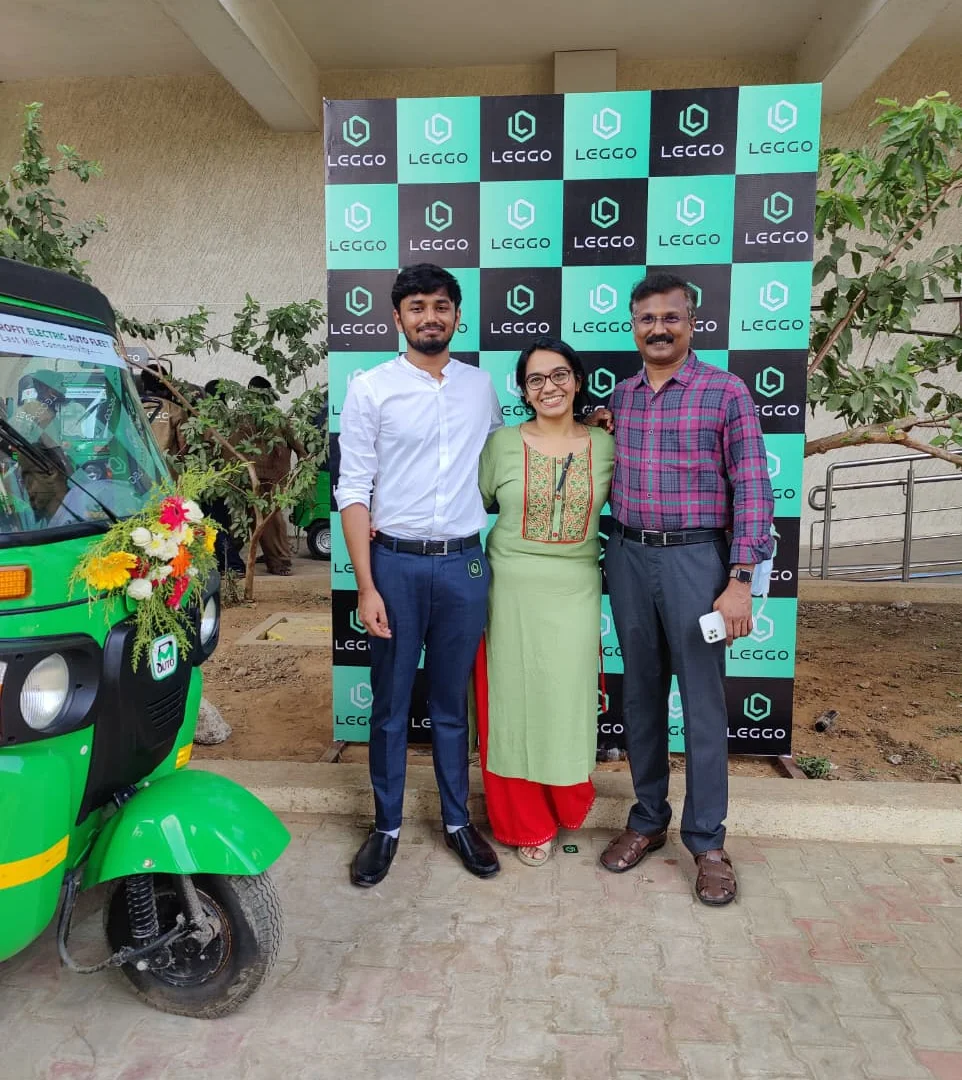
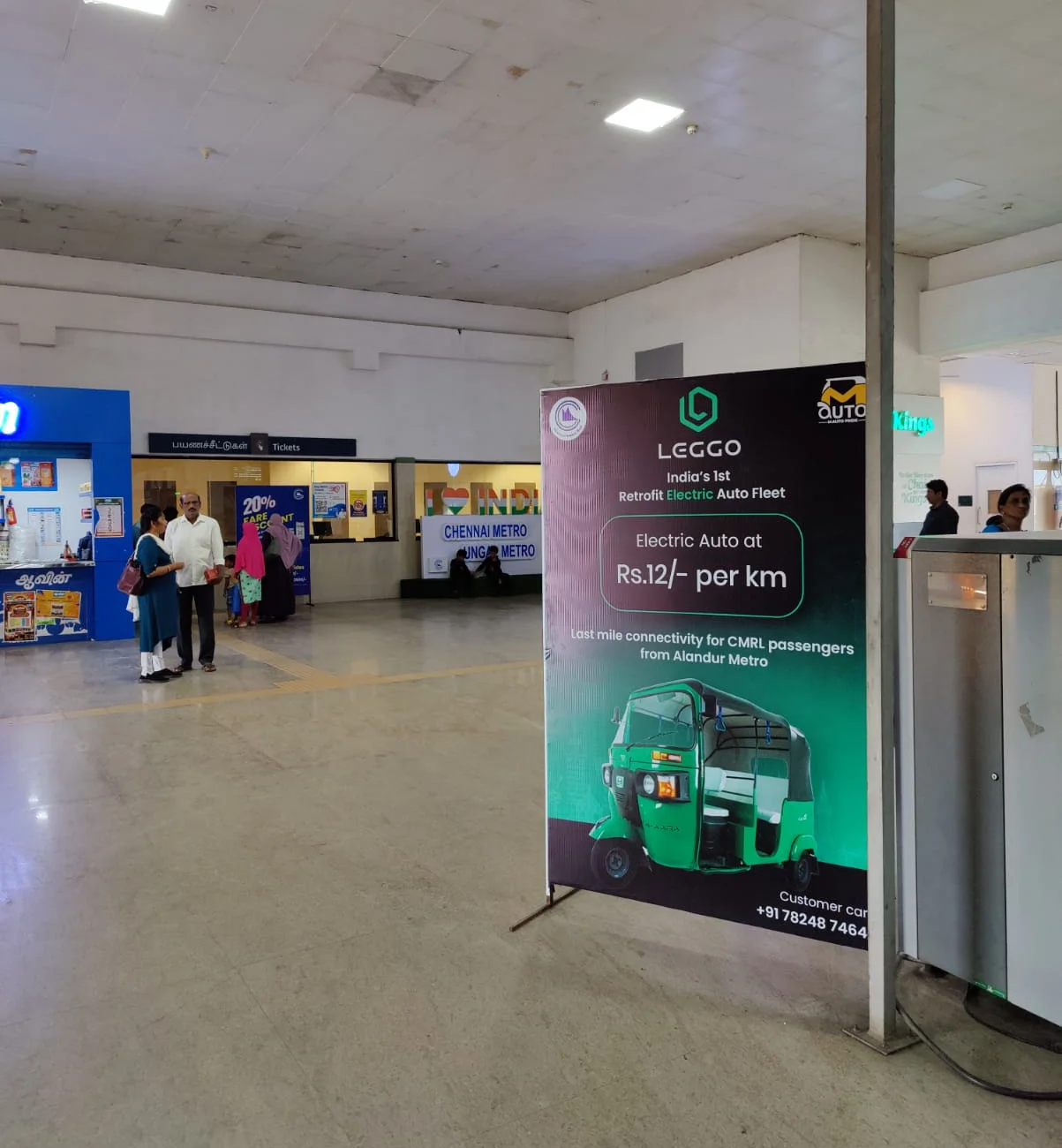
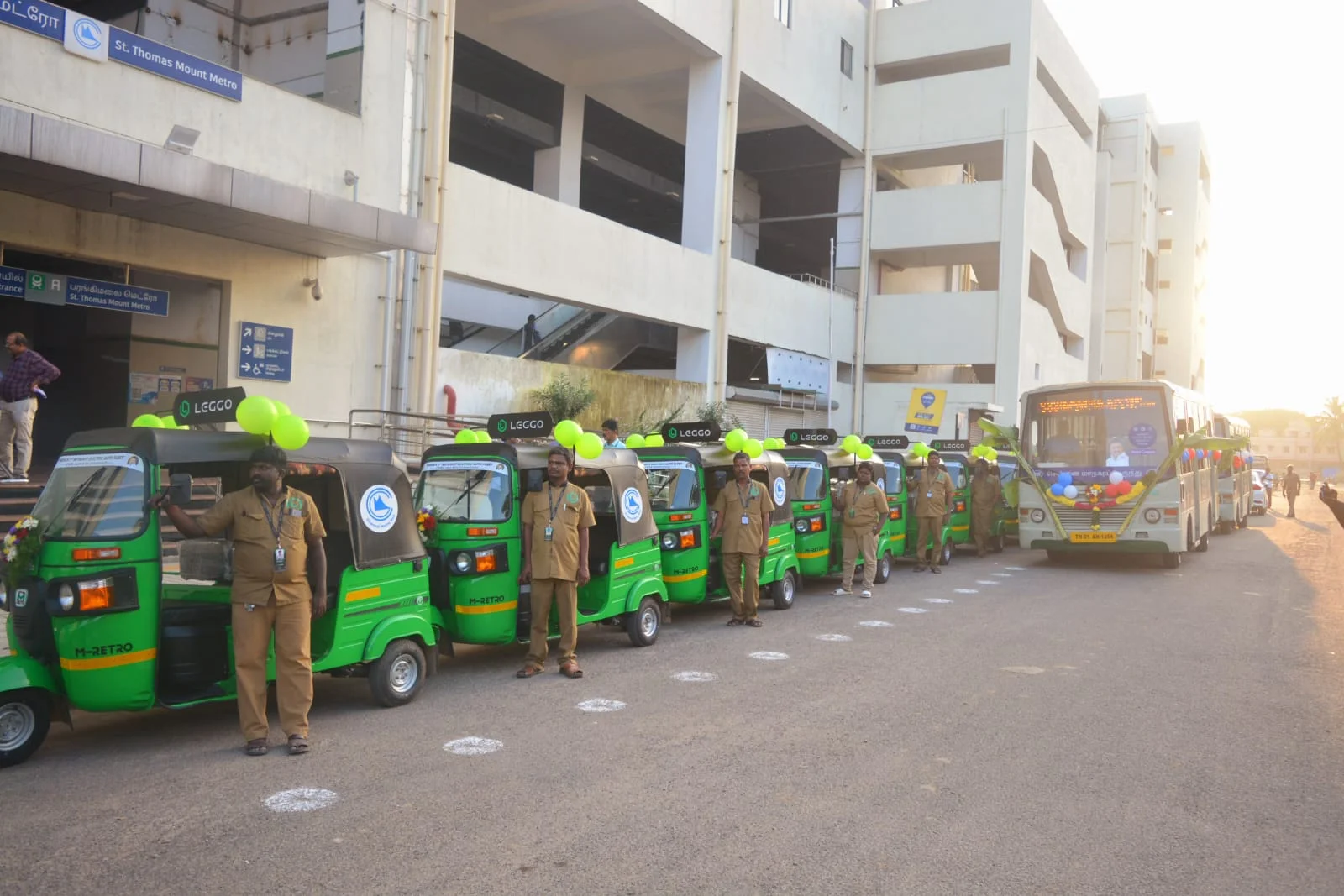
Twice the trips per auto, with zero spent on marketing.
Every auto did 6 trips a day in the first month. By March it was 12, and it held there as the fleet grew from 10 to 40.
Trips per auto per day
When people rode
Chennai noticed.
Tamil TV, the papers and our own riders, on a ₹20 ride from the metro.
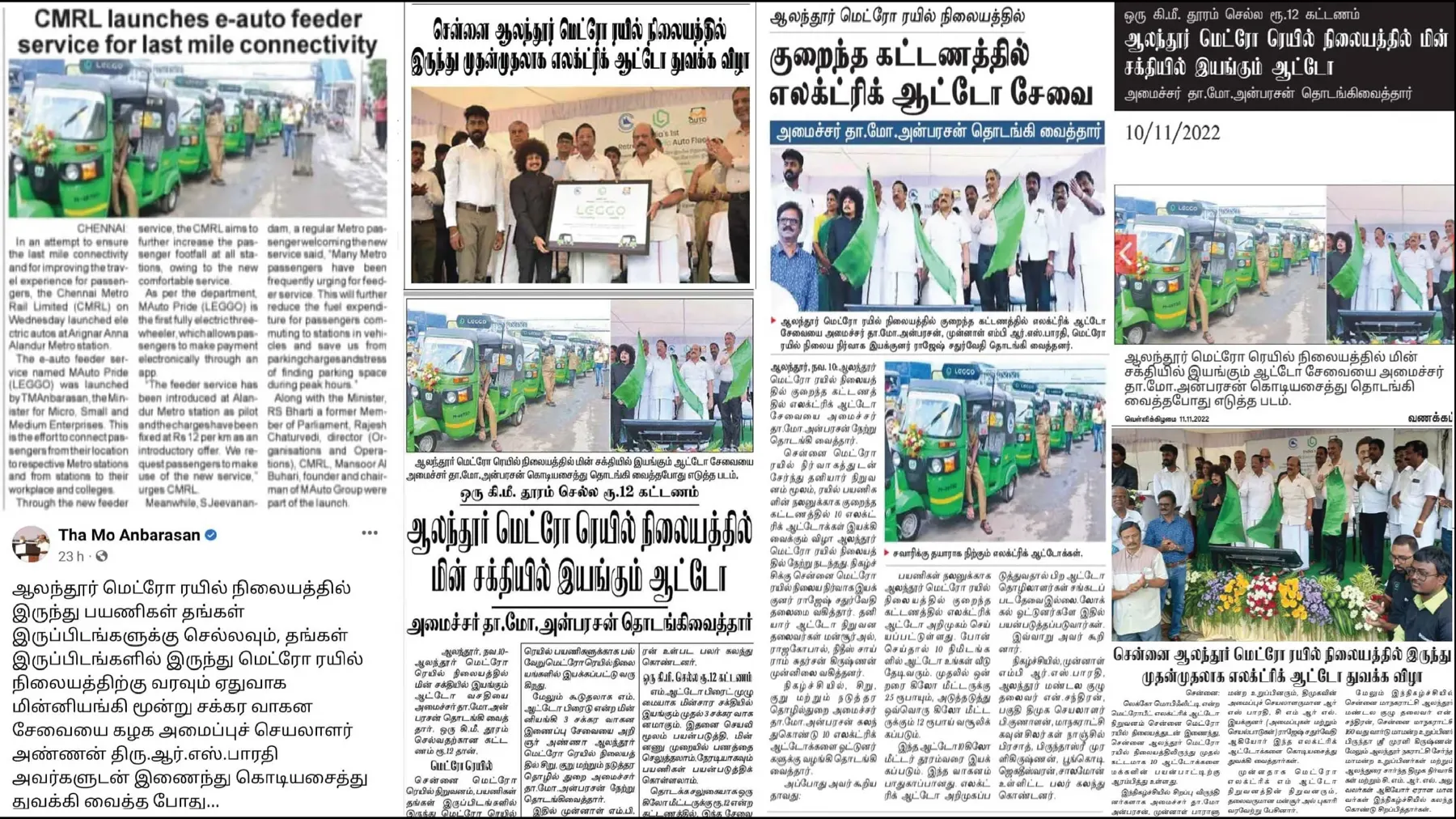
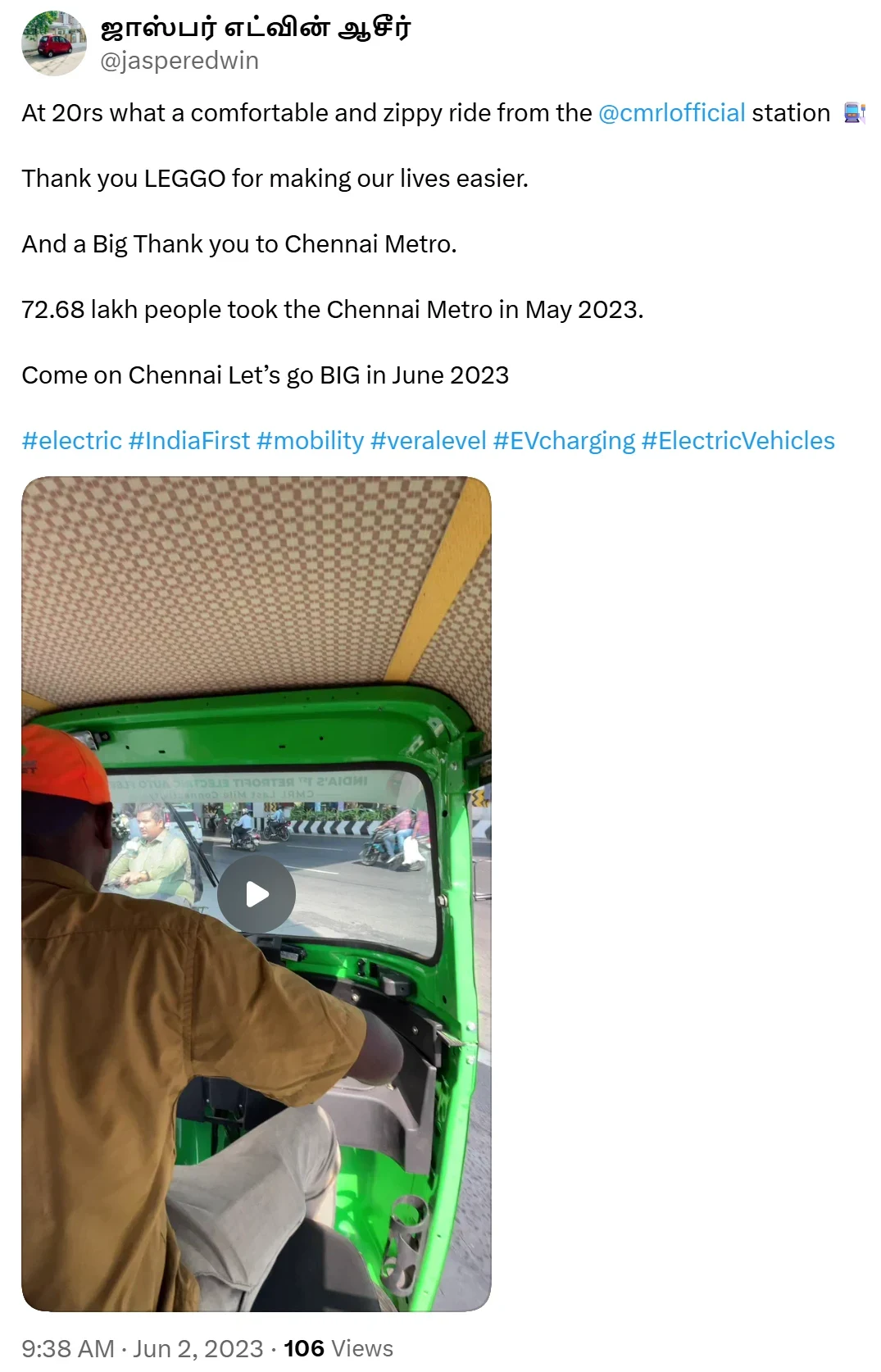
“At ₹20, what a comfortable and zippy ride from the metro station. Thank you Leggo for making our lives easier.”
Then Chennai went under.
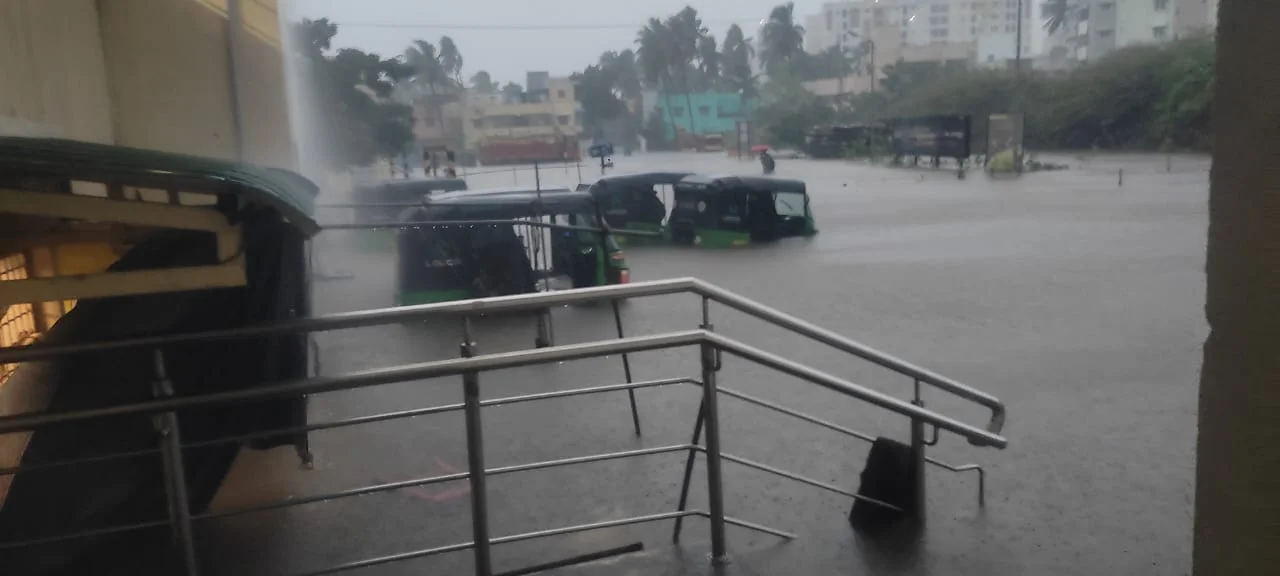
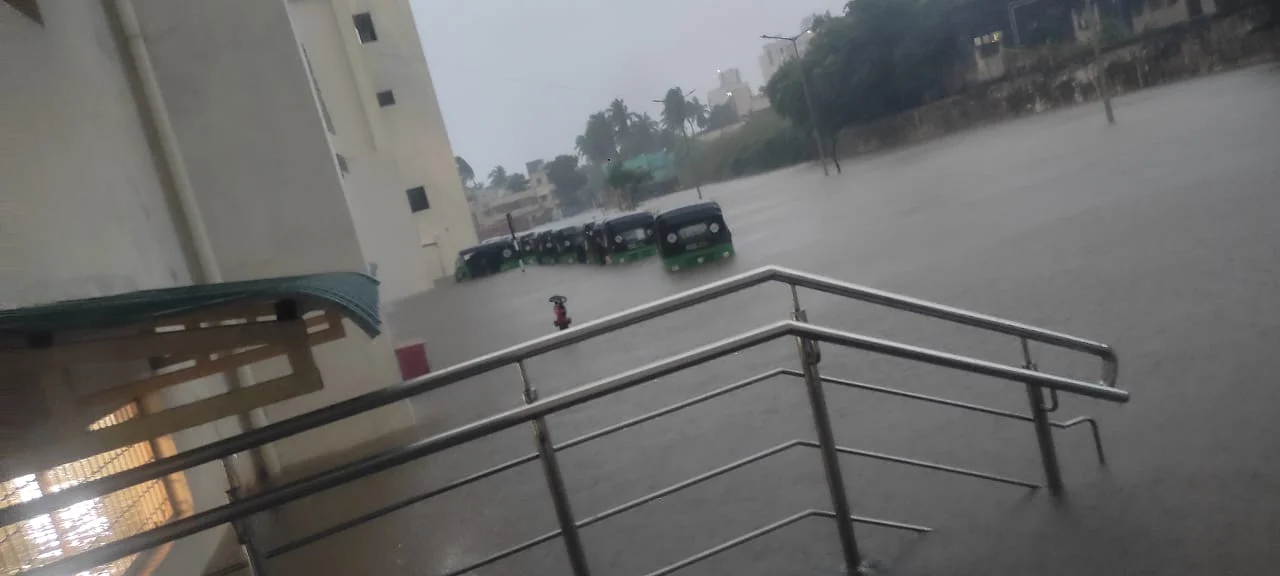
The floods reached the depot. Our autos sat in water up to their roofs, and the company never recovered from it.
 Next case studySecond Thought →2023 · Active